WHEN YOUR VERY FIRST MEAL IS YOUR SIBLING
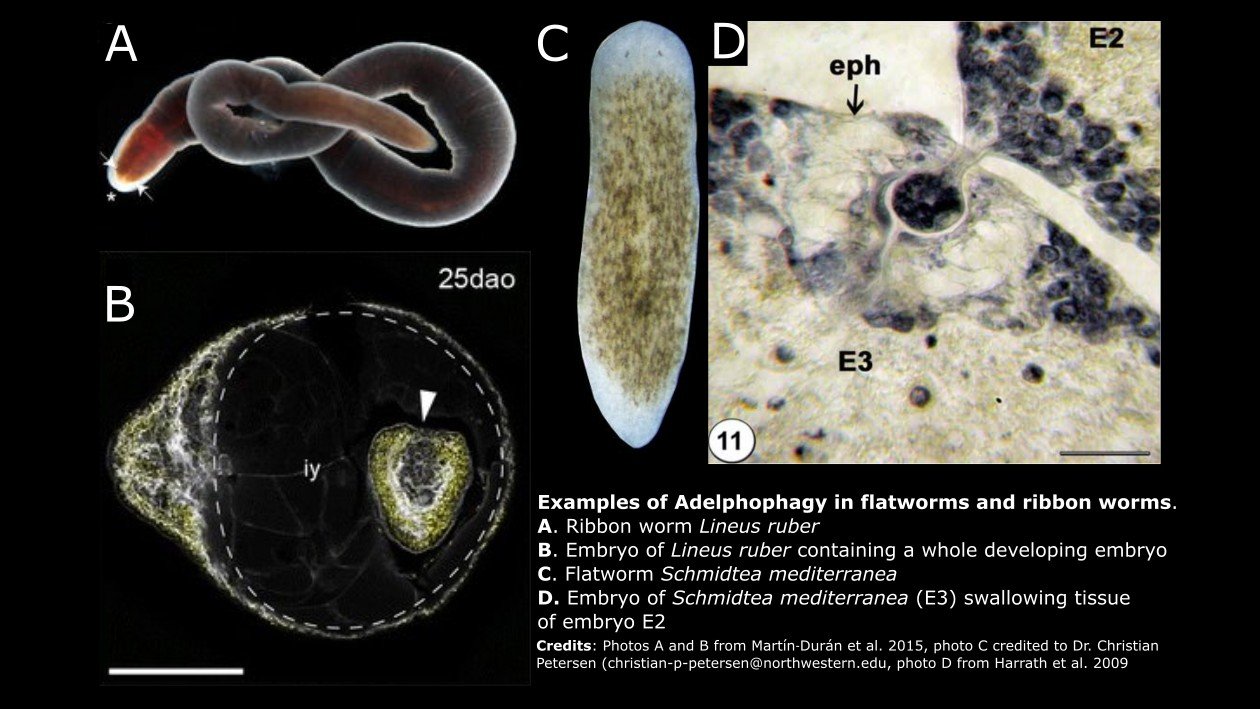
Nature never stops amazing us with the incredible diversity of parental strategies that have evolved to increase offspring survival. During development, mothers provide nutrients to their young in different ways, usually through a placenta, maternal tissues, or yolk stored in the egg. But, can you believe that there is an extreme case in which the food that mothers provide is the siblings that are sharing the same maternal space? This phenomenon, known as adelphophagy, is relatively rare in the animal kingdom, but has been documented in vertebrates such as sharks, as well as in invertebrates like echinoderms, insects, molluscs, and annelids.
Maternal feeding of siblings also occurs in two types of invertebrates that are unfamiliar to many of us: flatworms and ribbon worms. Both are…
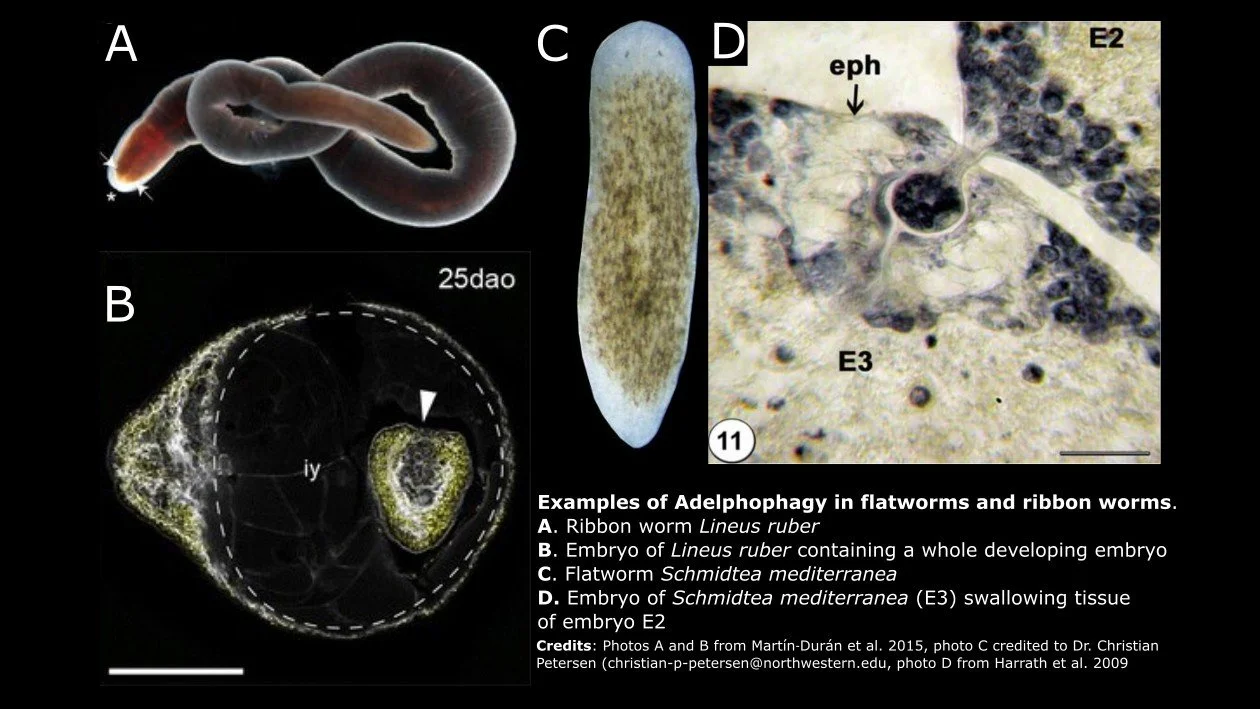
Nature never stops amazing us with the incredible diversity of parental strategies that have evolved to increase offspring survival. During development, mothers provide nutrients to their young in different ways, usually through a placenta, maternal tissues, or yolk stored in the egg. But, can you believe that there is an extreme case in which the food that mothers provide is the siblings that are sharing the same maternal space? This phenomenon, known as adelphophagy, is relatively rare in the animal kingdom, but has been documented in vertebrates such as sharks, as well as in invertebrates like echinoderms, insects, molluscs, and annelids.
Maternal feeding of siblings also occurs in two types of invertebrates that are unfamiliar to many of us: flatworms and ribbon worms. Both are soft-bodied invertebrates with worm-like bodies; however, they are not true worms. Flatworms belong to the phylum Platyhelminthes, whereas ribbon worms are mostly marine, predatory organisms in the phylum Nemertea.
Martín‐Durán and colleagues (2015) used molecular approaches to demonstrate that the larvae of the ribbon worm Lineus ruber actively feed on both unfertilized eggs and developing siblings. Remarkably, they saw larger individuals that had ingested another developing and apparently viable whole embryo. Ingestion of siblings began before metamorphosis and continued up until post-metamorphic juveniles left their egg string. In 2009, Harrath and colleagues documented adelphophagy for the first time in the planarian Schmidtea mediterranea. In histological slides, they observed some embryos ingesting tissues of adjacent sibling embryos. They could not discern whether entire embryos were consumed or only fragments of tissue. However, many more eggs were deposited in a cocoon than the number of juveniles that eventually hatched, which supports the hypothesis that siblings are consuming whole embryos.
Adelphophagy is remarkable, and a little weird, but it provides valuable insight for comparing early developmental competition and life history strategies across animals. It is rather difficult to study in detail due to the challenges of observing and testing these interactions directly, but further research will be essential to clarify under which ecological or evolutionary factors adelphophagy evolves.
Sources:
Harrath A, Sluys R, Zghal F & Tekaya S. 2009. First report of adelphophagy in flatworms during the embryonic development of the planarian Schmidtea mediterranea (Benazzi, Baguñà, Ballester, Puccinelli & Del Papa, 1975) (Platyhelminthes, Tricladida). Invertebrate Reproduction & Development 53(3), 117–124. https://doi.org/10.1080/07924259.2009.9652297
Martín-Durán JM, Vellutini BC & Hejnol A. 2015. Evolution and development of the adelphophagic, intracapsular Schmidt’s larva of the nemertean Lineus ruber. EvoDevo 6, 28. https://doi.org/10.1186/s13227-015-0023-5
IS THE HEALTH OF THE OFFSPRING REALLY ONLY THE MOTHER’S RESPONSIBILITY?
Decades of research have been dedicated to link the mother’s health and nutritional habits with the health of their children in both the short and the long term. And yes, it is important of course! However, what do we know about the effect of the father’s nutritional habits? Is the father’s only job really to contribute sperm to fertilize the egg? In short, the answers are “yes” and “no”. Yes, because the nutritional habits of the father also affect the offspring. And no, because the sperm does not only contribute genetic material, but also play a fundamental role in fetal and child development.
In an elegant review, Skerrett-Byrne and colleagues (2025) remind us that sperm is far from being only a passive DNA carrier, but rather is an epigenetically active player …
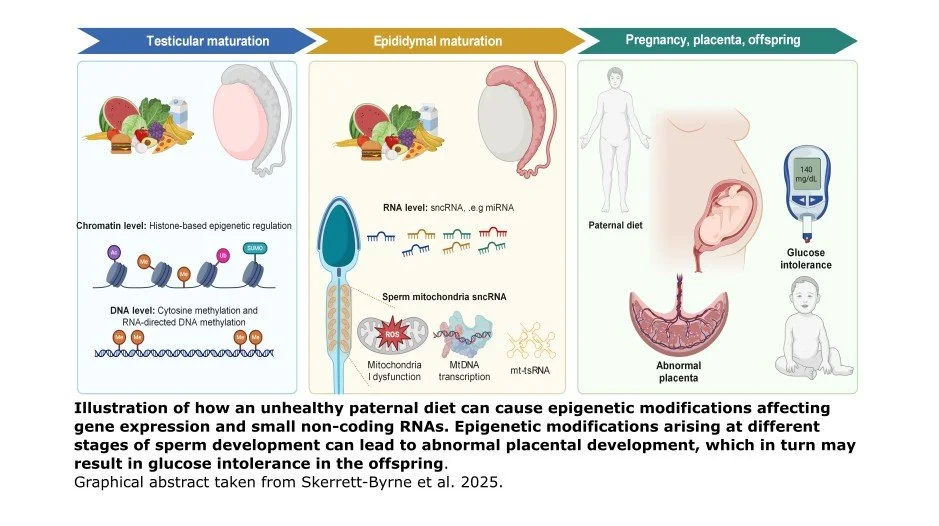
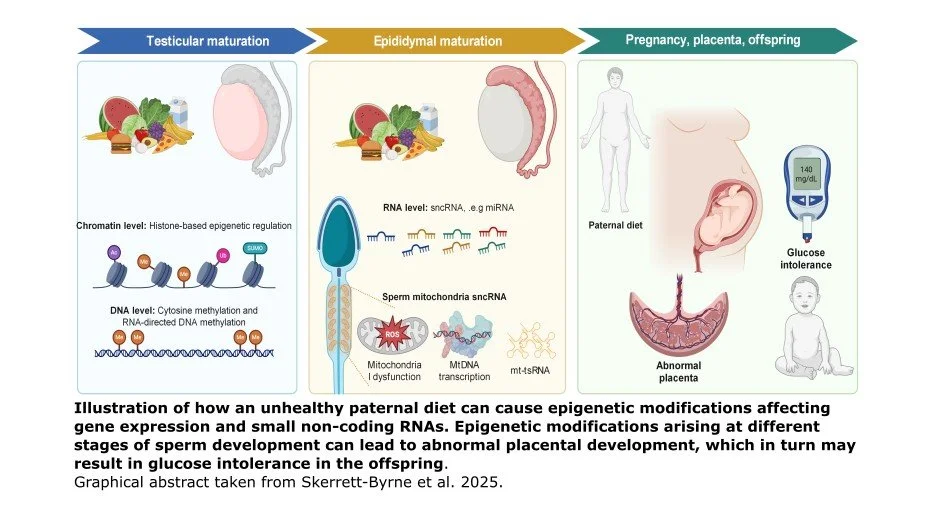
Decades of research have been dedicated to link the mother’s health and nutritional habits with the health of their children in both the short and the long term. And yes, it is important of course! However, what do we know about the effect of the father’s nutritional habits? Is the father’s only job really to contribute sperm to fertilize the egg? In short, the answers are “yes” and “no”. Yes, because the nutritional habits of the father also affect the offspring. And no, because the sperm does not only contribute genetic material, but also play a fundamental role in fetal and child development.
In an elegant review, Skerrett-Byrne and colleagues (2025) remind us that sperm is far from being only a passive DNA carrier, but rather is an epigenetically active player. The epigenome can be thought of as a set of chemical tags that dictate gene expression, turning different genes on and off. In their review, the researchers point out that sperm can acquire epigenetic information, driven by environmental and dietary stressors. They highlight evidence that shows how a high-fat-diet (HFD) causes epigenetic changes in fathers’ sperm that in turn alter the expression of genes and small non-coding RNAs. These changes are implicated in placental and embryonic development, as well as metabolic disease susceptibility in offspring after birth.
The review goes a step further by introducing an interactive digital application, ShinySpermPlacenta, designed to facilitate open-access exploration of the paternal epigenetic data. Users can explore the overlap between HFD sperm epigenetic data and placenta phenotype-driven genes. The app aims to promote systems-level understanding of how preconception environments shape the next generation.
Although the research on the transgenerational effects of paternal nutrition is still new compared to research on maternal nutrition, the growing body of evidence is substantial. Skerrett-Byrne and colleagues highlight the need to reframe preconception care as a truly bi-parental responsibility, rather than placing the entire burden on mothers. This fresh perspective could improve fertility and reduce pregnancy complications and chronic disease in our society.
Source:
Skerrett-Byrne DA, Pepin AS, Laurent K, Beckers J, Schneider R, de Angelis MH & Teperino R. 2025. Dad’s diet shapes the future: How paternal nutrition impacts placental development and childhood metabolic health. Molecular Nutrition & Food Research, 0:e70261. https://doi.org/10.1002/mnfr.70261
AN OVIPAROUS CAECILIAN FEEDS ON OVIDUCTAL MILK
When you think about amphibians, caecilians are probably not the first animals that come to mind. They are among the most poorly understood amphibians, largely due to their fossorial lifestyle. Classified in the order Gymnophiona, they differ from frogs and salamanders because they are limbless and elongated, resembling snakes or worms more than a “typical” amphibian.
Despite their secretive nature, researchers have documented interesting parental feeding mechanisms, such as…
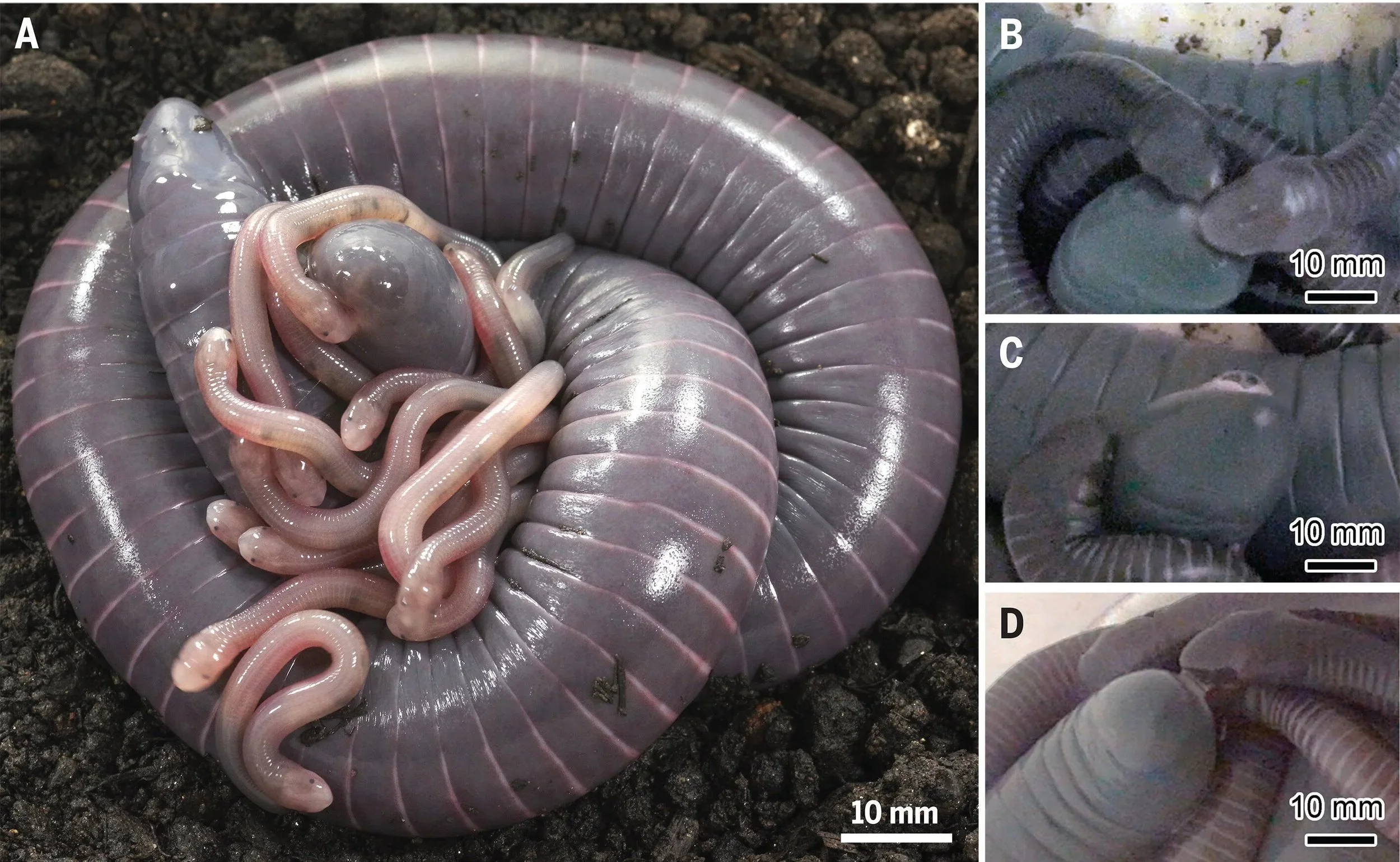
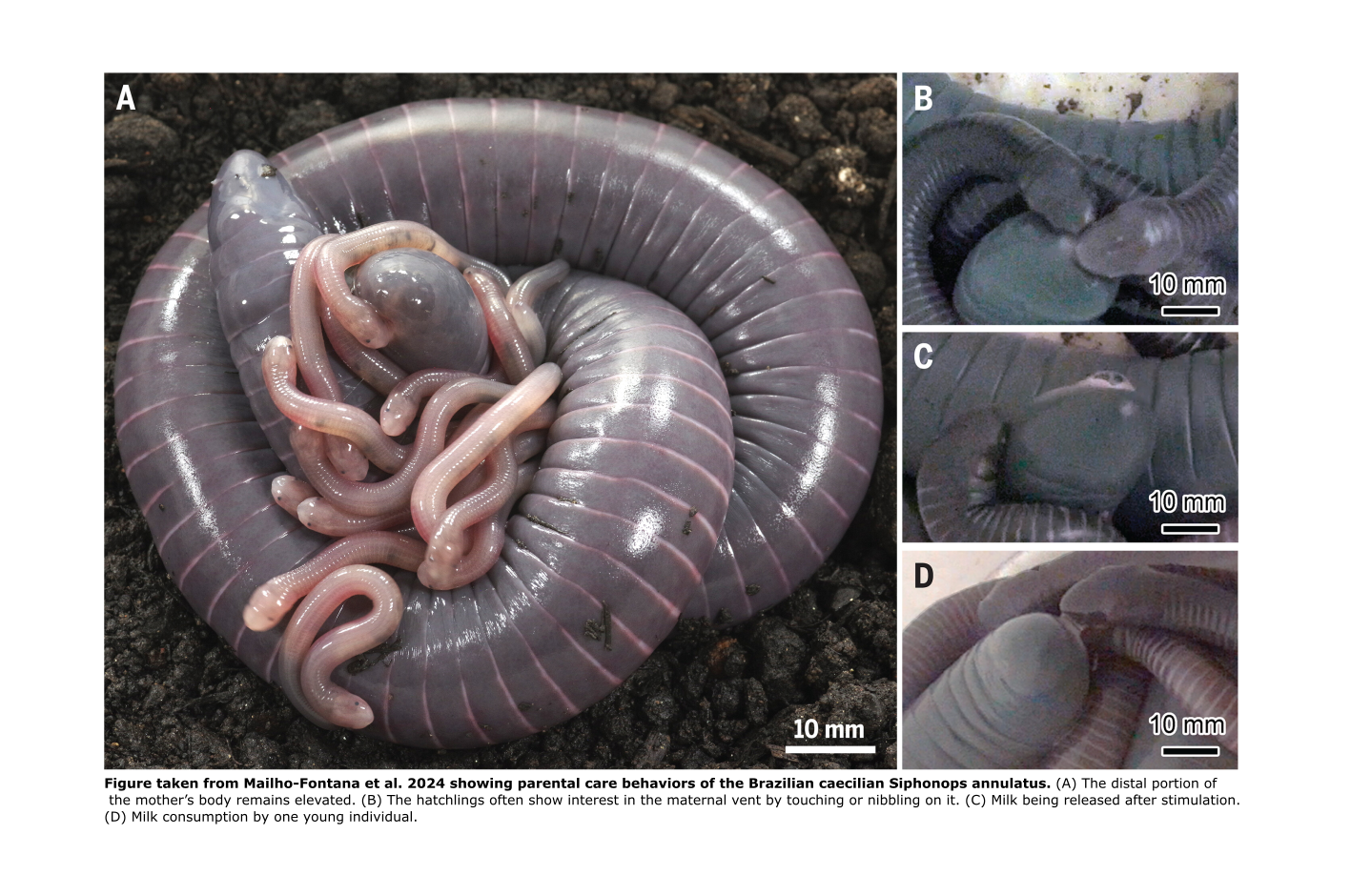
Figure taken from Mailho-Fontana et al. 2024 showing parental care behaviors of the Brazilian caecilian Siphonops annulatus. (A) The distal portion of the mother’s body remains elevated. (B) The hatchlings often show interest in the maternal vent by touching or nibbling on it. (C) Milk being released after stimulation. (D) Milk consumption by one young individual.
When you think about amphibians, caecilians are probably not the first animals that come to mind. They are among the most poorly understood amphibians, largely due to their fossorial lifestyle. Classified in the order Gymnophiona, they differ from frogs and salamanders because they are limbless and elongated, resembling snakes or worms more than a “typical” amphibian. Despite their secretive nature, researchers have documented interesting parental feeding mechanisms, such as nourishment within the oviducts in live-bearing species and skin feeding in oviparous species.
However, this fascinating group keeps surprising us with more forms of parental feeding. Recently, Mailho-Fontana et al. (2024) documented milk provisioning in the Brazilian oviparous caecilian Siphonops annulatus. The mothers exude a secretion from the vent, where the hatchlings gather and feed. It seems like the hatchlings stimulate the female both through physical contact -– touching the vent with their snouts or nibbling – and through high-pitched vocalizations.
Besides milk provisioning, this species also exhibits skin feeding, first described in 2008 by Wilkinson and colleagues. However, this behavior appears to be less frequent, occurring weekly, while milk is provided daily. Milk is clearly important for the nutrition of the young.
But, the researchers did not stop there! They also found that the milk originates from the oviductal lumen and glands that develop from hypertrophied oviductal epithelial cells during the parental care phase. Using histological and chemical analyses, the researchers identified that the milk is composed of neutral glycoconjugates and lipids, a composition similar to the nutritive fluid found in the oviducts of live-bearing caecilians.
Mailho-Fontana et al. (2024) emphasize the importance of integrative studies that join together fieldwork, life history, behavior, and morphology when dealing with animals that have fossorial lifestyles. Something remarkable about their finding is that it is the first time that oviductal milk production has been documented in an oviparous amphibian, which exemplifies the complexity of the evolution of reproductive modes in vertebrates.
The article’s supplementary material (https://doi.org/10.1126/science.adi5379) includes fascinating videos that clearly show the release of milk from the maternal vent and the feeding behavior of the hatchlings.
Source:
Mailho-Fontana PL, Antoniazzi MM, Coelho GR, Pimenta DC, Fernandes LP, Kupfer A ED Brodie Jr, Jared C. (2024). Milk provisioning in oviparous caecilian amphibians. Science 383, 1092–1095. https://doi.org/10.1126/science.adi5379
MILK PROVISIONING IN TSETSE FLIES
You probably have heard about the tsetse fly, the African fly which feeds on blood of both humans and animals. They are a troubling public health concern because they are vectors of African trypanosomes. However, tsetse flies are also known for something else - something extraordinary.
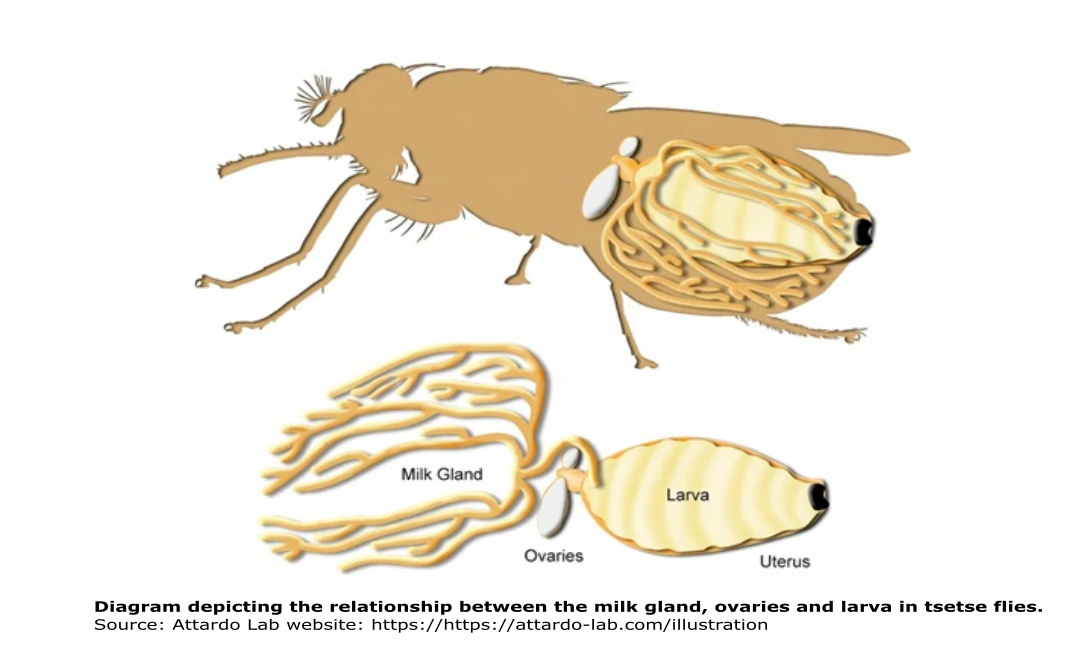
Similar to humans, tsetse flies possess milk glands! Mother flies give birth to live young, after larvae develop inside of their uterus. To nourish their larvae …
You probably have heard about the tsetse fly, the African fly which feeds on blood of both humans and animals. They are a troubling public health concern because they are vectors of African trypanosomes. However, tsetse flies are also known for something else - something extraordinary.
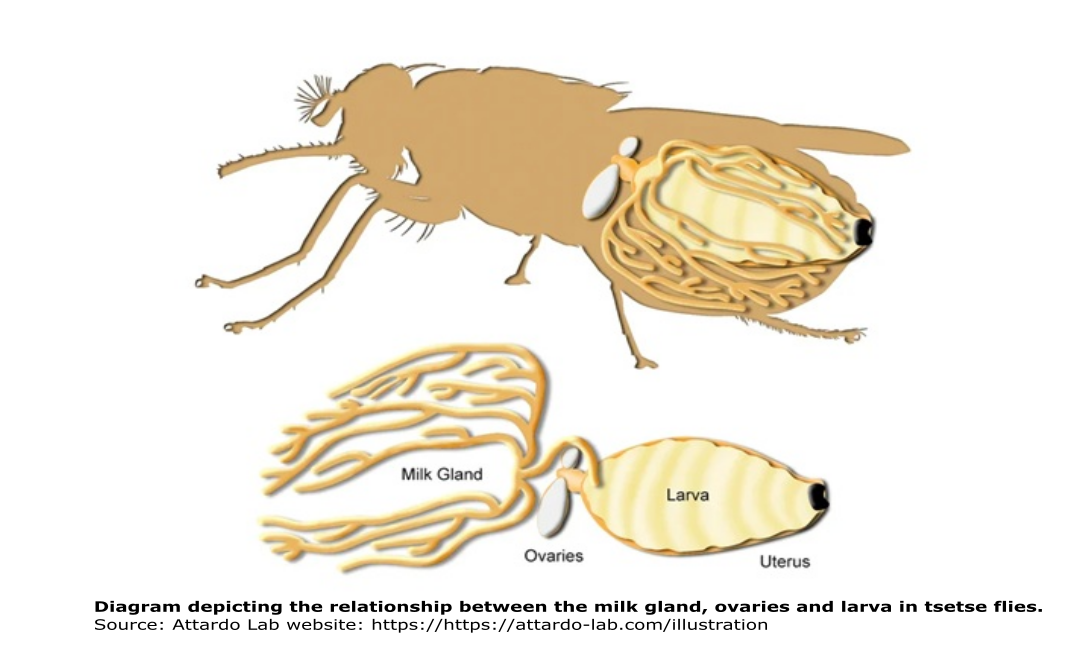
Similar to humans, tsetse flies possess milk glands! Mother flies give birth to live young, after larvae develop inside of their uterus. To nourish their larvae while in the uterus, female tsetse flies use a modified accessory milk gland, which provides proteins and lipids needed for larval development.
In a functional analysis study, Attardo and collaborators (2008) knocked down a milk protein in pregnant female tsetse flies to understand its function in larval nutrition. The knockdown group had a lower rate of pupal deposition relative to the control group in which synthesis of the milk protein was not disrupted. The results suggest that the protein plays an important role in larvigenesis, providing not only nutrition, but also important biochemical function as a carrier of lipid and/or sterol type molecules.
But there is more, a 2-for-1 on socially transferred materials! Along with the milk, mother flies also transmit some bacterial symbionts to their larvae. Balmand and collaborators (2013) found that some symbionts are maternally transferred via the milk glands. These symbionts colonize the lumen of the milk glands and are transferred to the larvae along with the milk. The microbes are important because they might affect the insect’s capacity to act as a vector of trypanosomes. Also, given the incomplete nutritional value of blood, the symbionts are essential in complementing milk to maintain the tsetse fly life cycle.
Watch this incredible video from KQED: https://www.kqed.org/science/1956004/a-tsetse-fly-births-one-enormous-milk-fed-baby
Sources:
Attardo GM, Lohs C, Heddi A, Alam UH, Yildirim S & Aksoy S. (2008). Analysis of milk gland structure and function in Glossina morsitans: Milk protein production, symbiont populations and fecundity. Journal of Insect Physiology 54, 1236–1242. doi.org/10.1016/j.jinsphys.2008.06.008
Balmand S, Lohs C, Aksoy S & Heddi A. (2013). Tissue distribution and transmission routes for the tsetse fly endosymbionts. Journal of Invertebrate Pathology 112, S116–S122. doi.org/10.1016/j.jip.2012.04.002
FEEDING ON SLIME
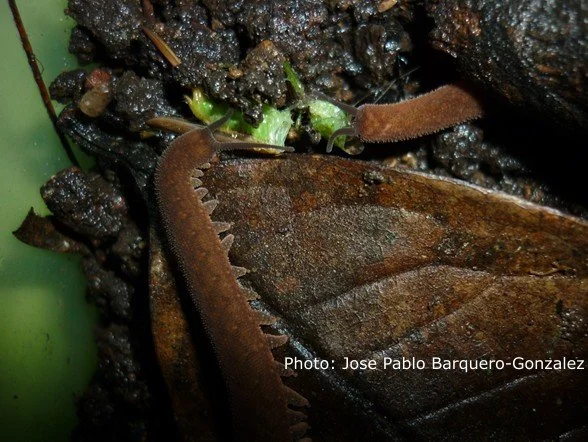
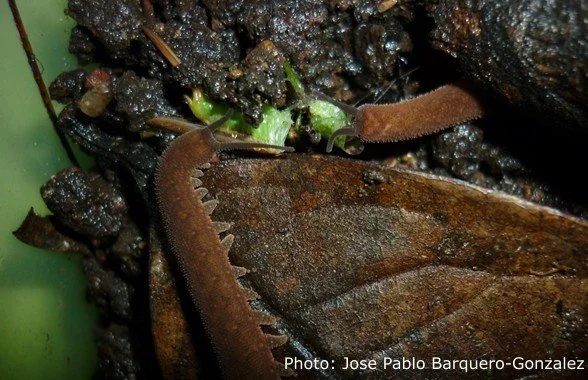
Velvet worms are among the most extraordinary animals on earth! With a very simple body structure, these ancient animals have been living on our planet for nearly 500 million years. Despite their name, they are not actually worms. They are not insects either, but look like caterpillars, and belong to their own phylum called Onycophora.
Onycophorans have a remarkable technique for hunting. To capture their prey, velvet worms eject a sticky, adhesive slime from their oral papillae, which are located close to their mouth. The sticky slime immobilizes the prey so that the velvet worm can then casually approach it.
In a study of feeding behavior conducted in Costa Rica in 2019, researchers documented for the first time a form of parental feeding in velvet worms...
Velvet worms are among the most extraordinary animals on earth! With a very simple body structure, these ancient animals have been living on our planet for nearly 500 million years. Despite their name, they are not actually worms. They are not insects either, but look like caterpillars, and belong to their own phylum called Onycophora.
Onycophorans have a remarkable technique for hunting. To capture their prey, velvet worms eject a sticky, adhesive slime from their oral papillae, which are located close to their mouth. The sticky slime immobilizes the prey so that the velvet worm can then casually approach it.
In a study of feeding behavior conducted in Costa Rica in 2019, researchers documented for the first time a form of parental feeding in velvet worms involving a socially transferred material. Barquero-Gonzales and colleagues showed that in some species, during the first two weeks after birth, the young only eat one thing: the threads of slime used by their parents to capture their prey! This is an unusual form of parental care, and noteworthy as an example of early evolution of a socially transferred material given how ancient these creatures are.
The slime is composed of proteins and lipids, and although its original function may have been defense and prey capture, the components of the slime also represent a good quality food source. So far this is the only study documenting this behavior in velvet worms, so more work is needed to understand the nutritional importance of slime feeding in young velvet worms.
Source: Barquero-González JP, Vega-Hidalgo A & Monge-Nájera J. (2019). Feeding behavior of Costa Rican velvet worms: food hiding, parental feeding investment and ontogenetic diet shift (Onychophora: Peripatidae). doi.org/10.22458/urj.v11i2.2195