MILK PROVISIONING IN TSETSE FLIES
You probably have heard about the tsetse fly, the African fly which feeds on blood of both humans and animals. They are a troubling public health concern because they are vectors of African trypanosomes. However, tsetse flies are also known for something else - something extraordinary.
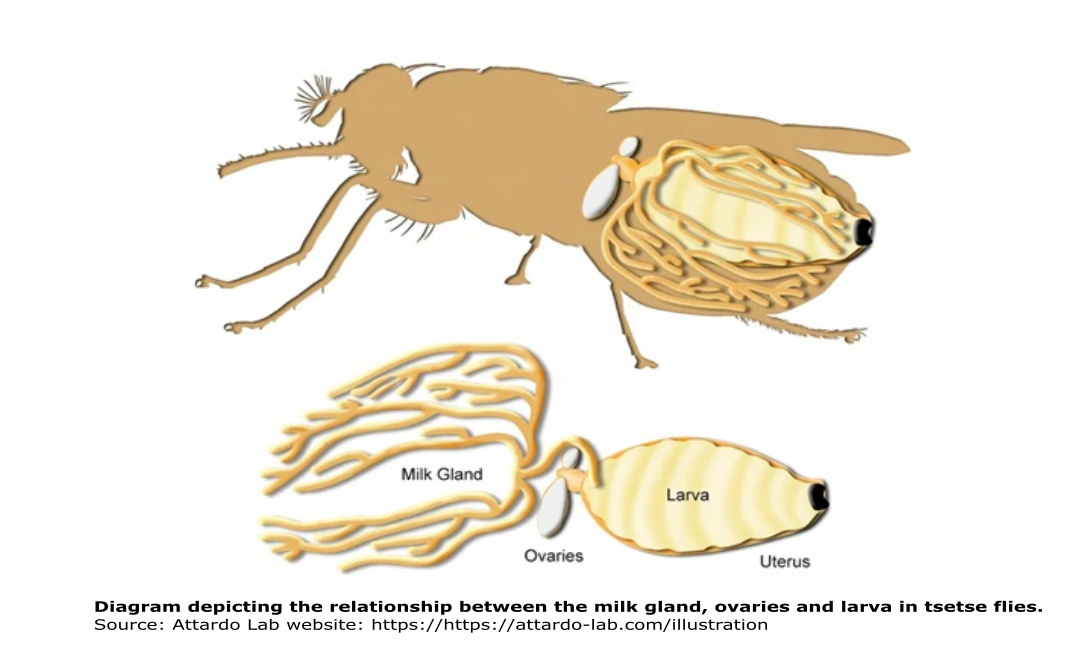
Similar to humans, tsetse flies possess milk glands! Mother flies give birth to live young, after larvae develop inside of their uterus. To nourish their larvae …
You probably have heard about the tsetse fly, the African fly which feeds on blood of both humans and animals. They are a troubling public health concern because they are vectors of African trypanosomes. However, tsetse flies are also known for something else - something extraordinary.
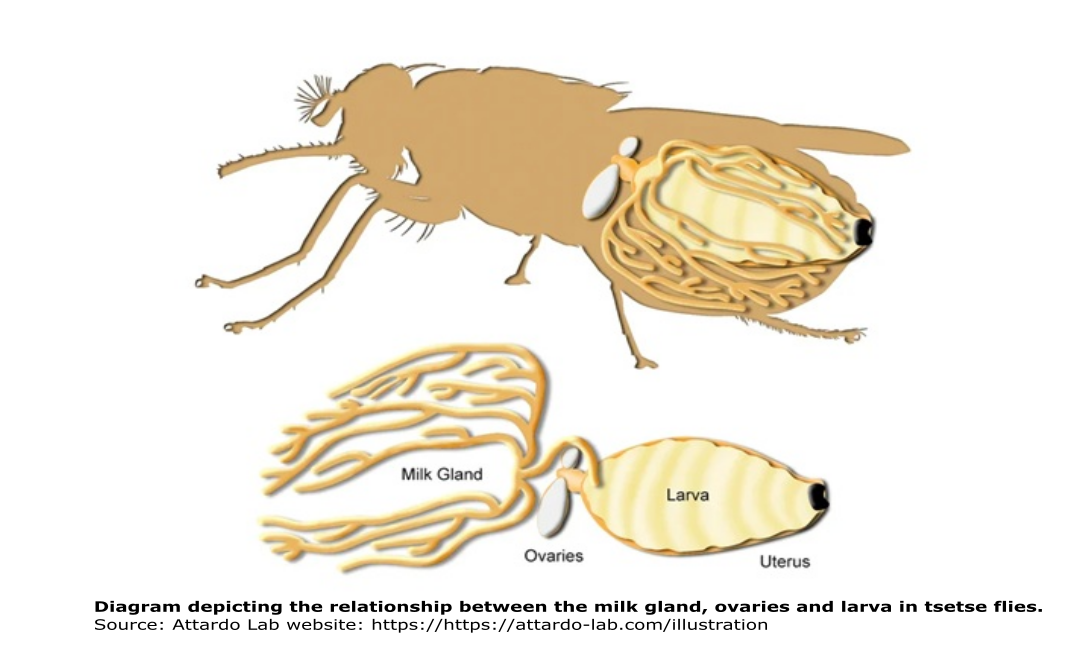
Similar to humans, tsetse flies possess milk glands! Mother flies give birth to live young, after larvae develop inside of their uterus. To nourish their larvae while in the uterus, female tsetse flies use a modified accessory milk gland, which provides proteins and lipids needed for larval development.
In a functional analysis study, Attardo and collaborators (2008) knocked down a milk protein in pregnant female tsetse flies to understand its function in larval nutrition. The knockdown group had a lower rate of pupal deposition relative to the control group in which synthesis of the milk protein was not disrupted. The results suggest that the protein plays an important role in larvigenesis, providing not only nutrition, but also important biochemical function as a carrier of lipid and/or sterol type molecules.
But there is more, a 2-for-1 on socially transferred materials! Along with the milk, mother flies also transmit some bacterial symbionts to their larvae. Balmand and collaborators (2013) found that some symbionts are maternally transferred via the milk glands. These symbionts colonize the lumen of the milk glands and are transferred to the larvae along with the milk. The microbes are important because they might affect the insect’s capacity to act as a vector of trypanosomes. Also, given the incomplete nutritional value of blood, the symbionts are essential in complementing milk to maintain the tsetse fly life cycle.
Watch this incredible video from KQED: https://www.kqed.org/science/1956004/a-tsetse-fly-births-one-enormous-milk-fed-baby
Sources:
Attardo GM, Lohs C, Heddi A, Alam UH, Yildirim S & Aksoy S. (2008). Analysis of milk gland structure and function in Glossina morsitans: Milk protein production, symbiont populations and fecundity. Journal of Insect Physiology 54, 1236–1242. doi.org/10.1016/j.jinsphys.2008.06.008
Balmand S, Lohs C, Aksoy S & Heddi A. (2013). Tissue distribution and transmission routes for the tsetse fly endosymbionts. Journal of Invertebrate Pathology 112, S116–S122. doi.org/10.1016/j.jip.2012.04.002