THE SNAIL’S LOVE DART
When we talk about competition for mates, we often think of behaviors involving tense fights or flamboyant displays of traits that signal quality. However, sometimes the competition continues even after mating, as the sperm must outcompete sperm from other mates.
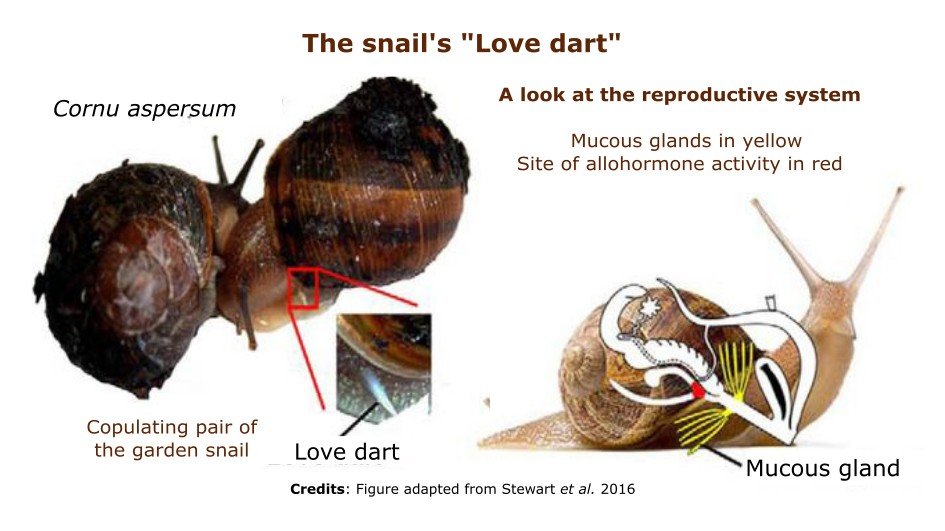
In land snails of the families Helicidae and Ariophantidae, this post-copulatory competition involves the injection of a calcium-based “love dart”. These snails are simultaneous hermaphrodites, so during mating, both partners can act as male and female, leading to …
When we talk about competition for mates, we often think of behaviors involving tense fights or flamboyant displays of traits that signal quality. However, sometimes the competition continues even after mating, as the sperm must outcompete sperm from other mates.
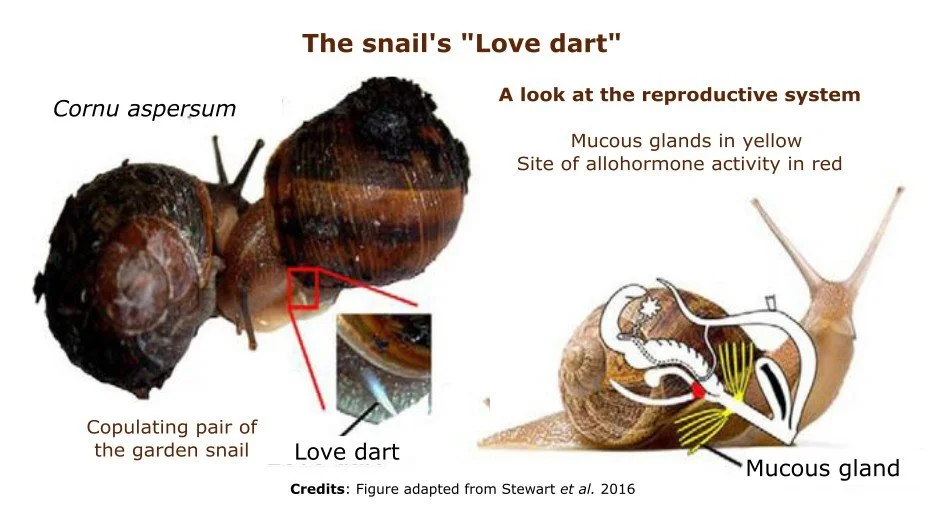
In land snails of the families Helicidae and Ariophantidae, this post-copulatory competition involves the injection of a calcium-based “love dart”. These snails are simultaneous hermaphrodites, so during mating, both partners can act as male and female, leading to competition over paternity. Shooting the dart forms part of the courtship ritual, in hopes of increasing the shooter’s success at paternity. The love dart is coated with sticky mucus from a gland located near the dart sac.
Using an integrative approach, Stewart and colleagues (2016) showed that the mucus of the garden snail Cornu aspersum contains a bioactive substance, dubbed the “love dart allohormone” (LDA). When the LDA is transferred to the mating partner, it induces physiological changes in the female reproductive system that reduce digestion of sperm. This socially transferred material increases the chances that the shooter’s sperm will be used for fertilization, thereby enhancing paternity success.
The study also identified numerous additional peptides in the dart mucus that may influence the mating behavior of recipient snails. Further research is needed to disentangle the functions of these peptides, as well as other LDA precursor molecules. Future work on this topic will advance our understanding of the evolution of accessory glands and their products as well as alternative reproductive strategies.
Source:
Stewart M, Wang T, Koene J, Storey KB & Cummins SF. 2016. A “Love” Dart Allohormone Identified in the Mucous Glands of Hermaphroditic Land Snails. Journal of Biological Chemistry 291:7938-7950. https://doi.org/10.1074/jbc.M115.704395
ORAL SEX IN SPIDERS
When we think about sexual rituals in insects, perhaps the first things that come to mind are sexual cannibalism of males by females, nuptial gifts from males to females, opportunistic mating, pair bonding, genital mutilation, or plugging. All of these, while impressive, are relatively well documented.
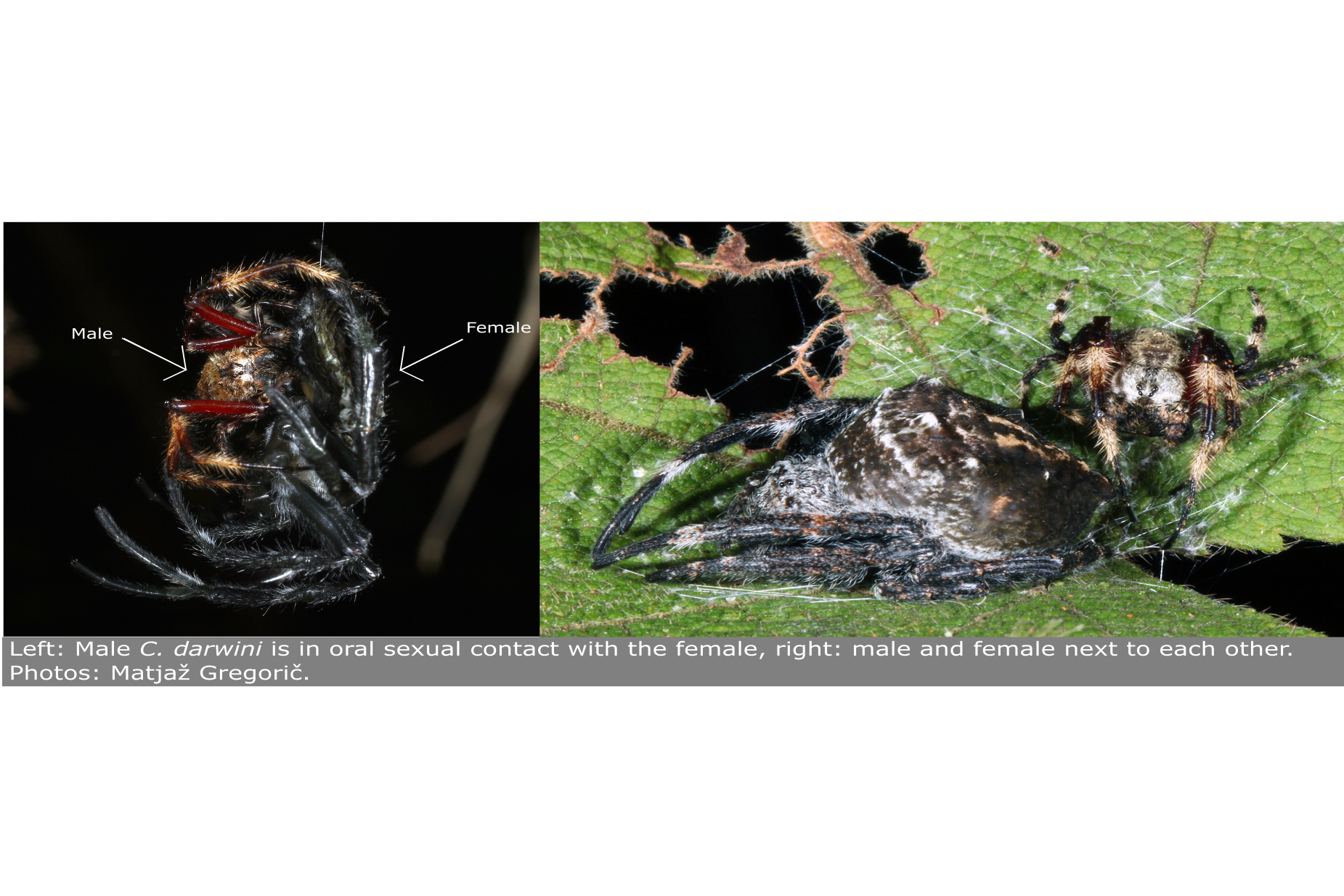
But, in 2016, Gregoric and colleagues studied the sexual behavior of the Darwin's bark spider from Madagascar …
When we think about sexual rituals in insects, perhaps the first things that come to mind are sexual cannibalism of males by females, nuptial gifts from males to females, opportunistic mating, pair bonding, genital mutilation, or plugging. All of these, while impressive, are relatively well documented.
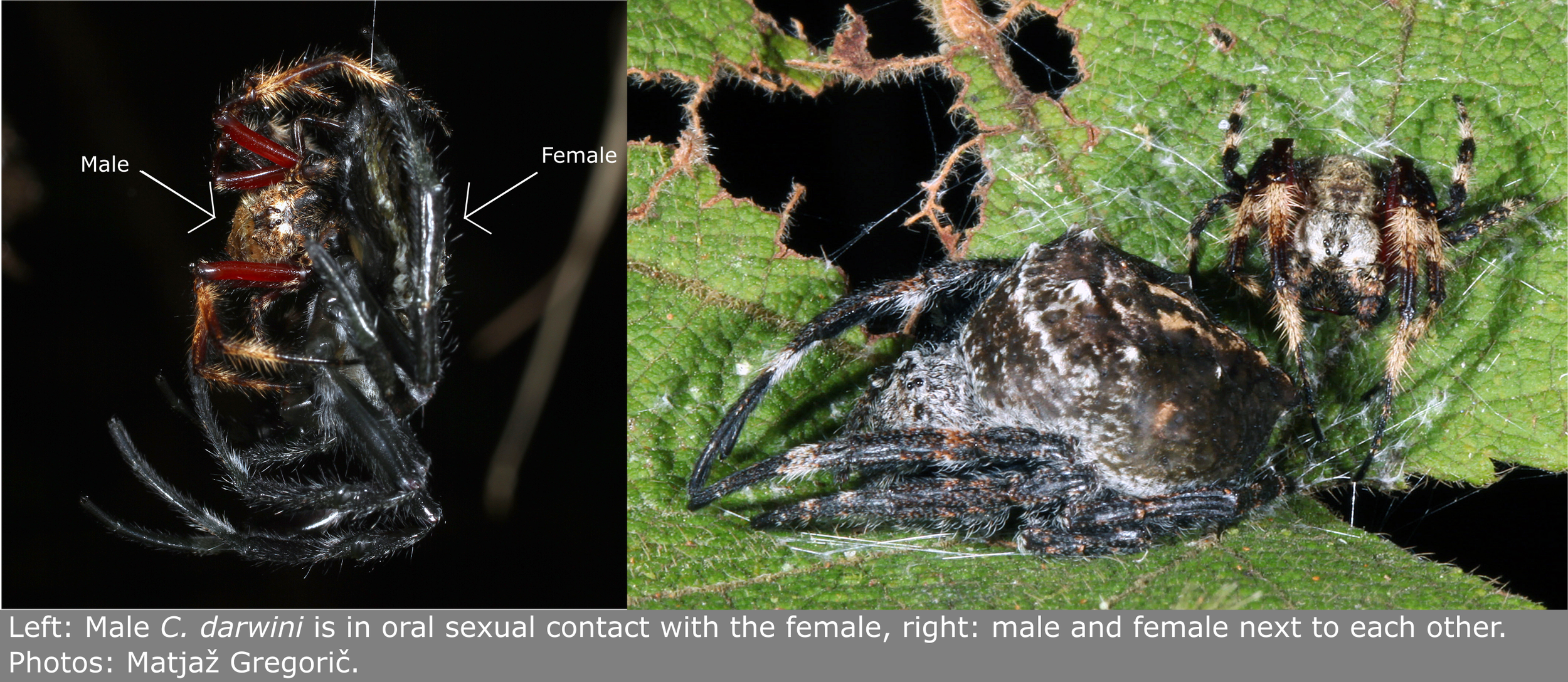
But, in 2016, Gregoric and colleagues studied the sexual behavior of the Darwin's bark spider from Madagascar. Among the rituals in the diverse and striking sexual repertoire of this species, researchers documented the occurrence of oral sex. That's right! Males of this species obligatorily secrete oral fluids (saliva) into the female genitalia before, during, and after copulation. How’s that for a socially transferred material!
The exact behavioral and adaptive significance of oral contact in the sexual repertoire of the Darwin's bark spider, is yet to be understood. However, the researchers point to two plausible functions of this behavior. By mechanisms of cryptic choice, females might assess male quality and bias the fertilization of their gametes to favor paternity with sperm from better quality males. Another hypothesis suggests that in order to reduce sperm competition, salivary enzymes might induce some sort of physiological advantage to the donor's sperm over the sperm of rivals. However, It is necessary to decipher the composition of male spider saliva before we can determine the significance of this behavior as well as how often it occurs among spiders, or even other animals.
Here you can watch a video of this behavior, posted by the Evolutionary Zoology Lab: https://www.youtube.com/watch?v=_Zp4-tjha6M. It shows the complete behavior, including the transfer of liquid into the female genitals!!!
Source:
Gregorič M, Šuen K, Cheng RC, Kralj-Fišer S & Kuntner M. (2016). Spider behaviors include oral sexual encounters. Scientific Reports 6, 25128. doi.org/10.1038/srep25128